Ultra-Pure Water Treatment Process for Electronic Industry
Date: 2026-07-06 Categories: Industry News Views: 404
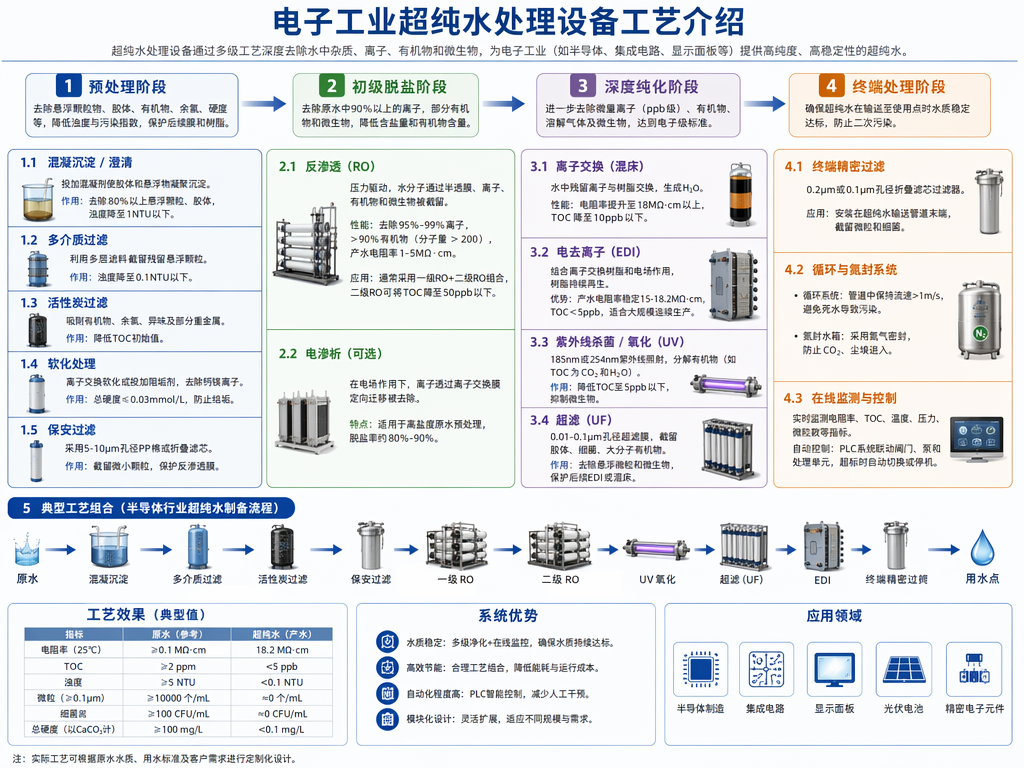
he ultra-pure water treatment equipment is mainly divided into four stages: pretreatment, primary desalination, deep purification and terminal treatment. The key processes and functions of each stage are as follows:
1. Pretreatment Stage
Pretreatment mainly removes suspended solids, colloids, organic matter, residual chlorine, hardness (calcium and magnesium ions) and other substances in raw water. Common processes include:
1.1 Coagulation Sedimentation / Clarification
Principle: Coagulants (such as polyaluminum chloride and aluminum sulfate) are dosed into raw water to agglomerate tiny suspended particles and colloids into large flocs, which are separated via sedimentation or clarification tanks. Function: Remove over 80% of suspended solids, colloids and partial organic matter from raw water, and reduce turbidity to below 1 NTU.
1.2 Multimedia Filtration
Principle: Multi-layer filter media of different particle sizes (quartz sand, anthracite, etc.) intercept residual suspended particles in water through mechanical screening and adsorption. Function: Reduce turbidity to below 0.1 NTU.
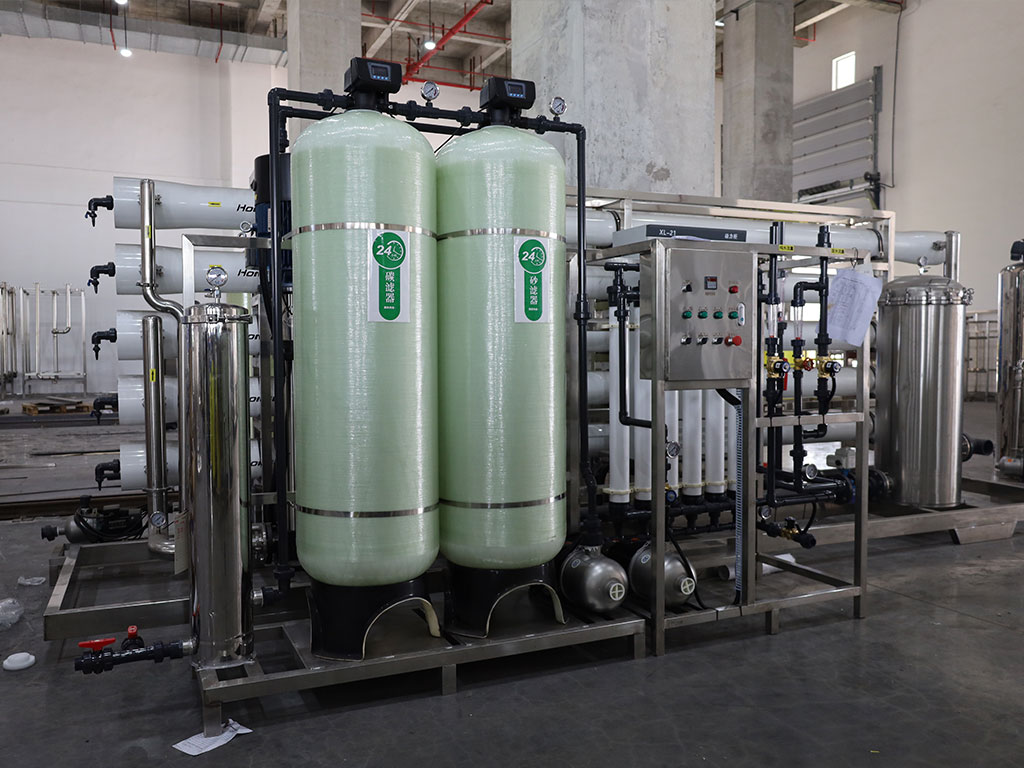
1.3 Activated Carbon Filtration
Principle: The porous structure of activated carbon adsorbs organic matter, residual chlorine, odors and partial heavy metals in water. Function: Lower the initial TOC value.
1.4 Softening Treatment
Ion Exchange Softening: Sodium-type cation exchange resin adsorbs calcium and magnesium ions to reduce water hardness (total hardness ≤ 0.03 mmol/L) and prevent scaling of subsequent equipment.
Scale Inhibitor Dosing: If raw water has low hardness, scale inhibitors can be directly dosed to inhibit crystallization and deposition of calcium and magnesium ions.
1.5 Security Filtration
Principle: PP cotton or folded filter cartridges with 5–10 μm pore size intercept residual micro-particles. Function: Prevent physical scratches on the surface of reverse osmosis membranes by particulate matter.
2. Primary Desalination Stage
Primary desalination removes over 90% of ions, partial organic matter and microorganisms in raw water. Common processes include:
2.1 Reverse Osmosis (RO)
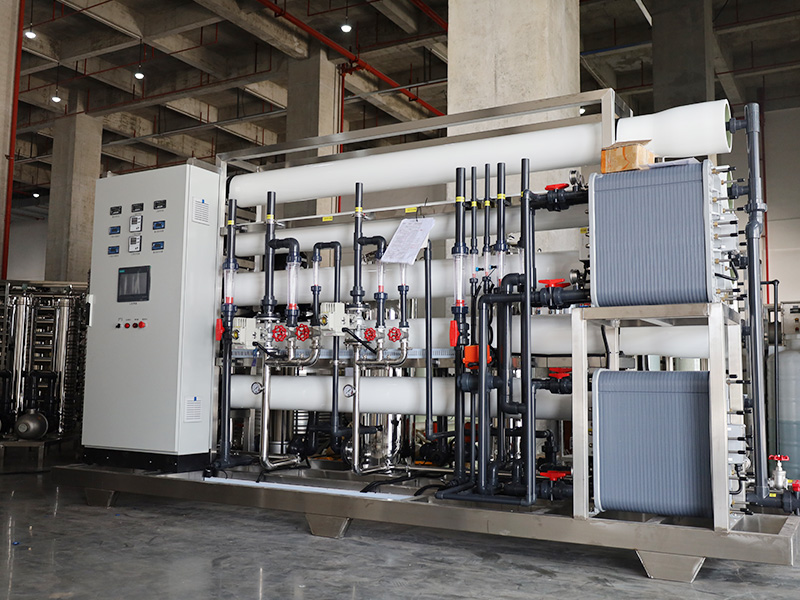
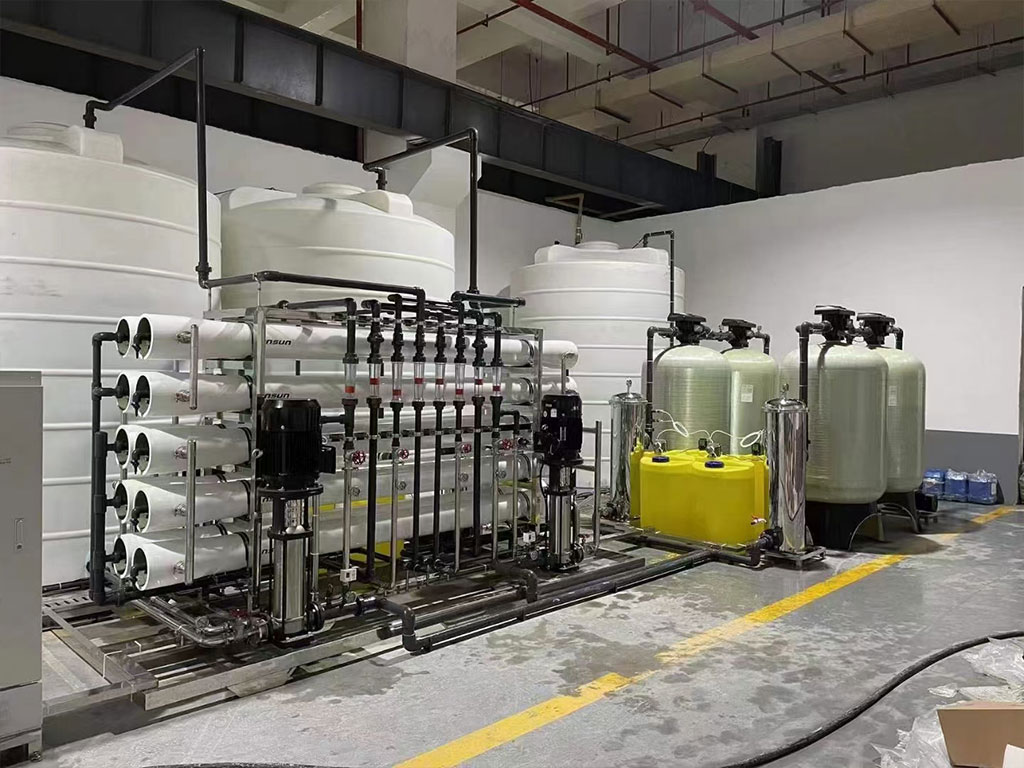
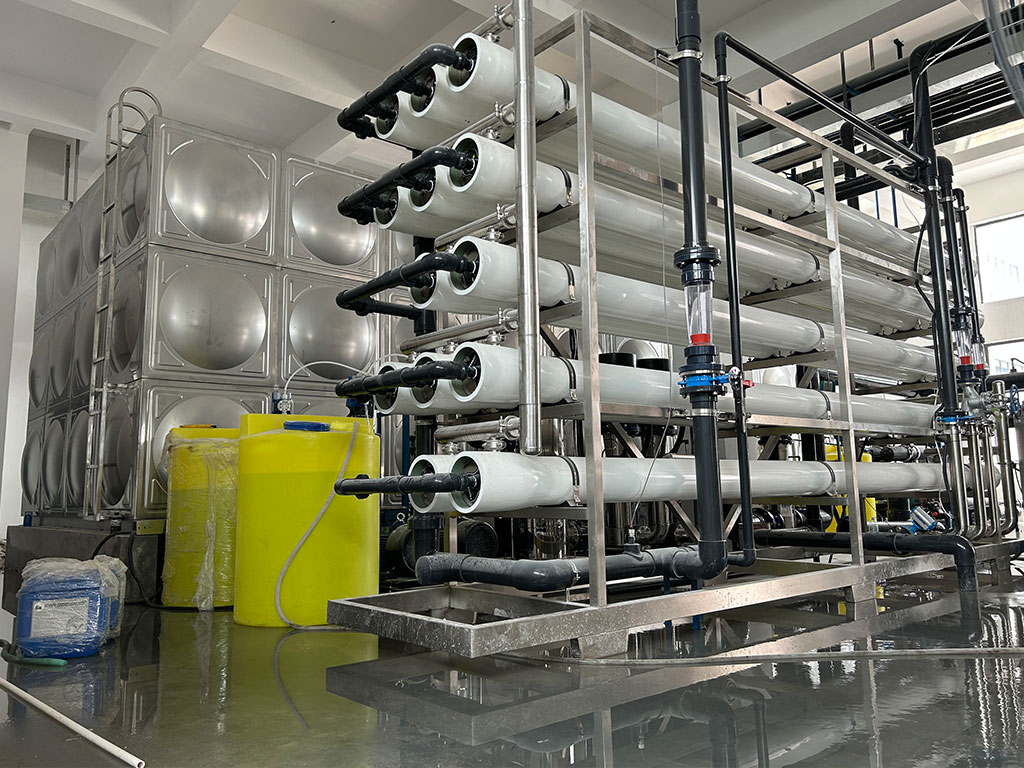
Principle: Driven by pressure, water molecules pass through semi-permeable reverse osmosis membranes (pore size approx. 0.1 nm), while ions, organic matter, bacteria and other contaminants are intercepted. Performance: Removes 95%–99% of ions (monovalent / divalent ions), over 90% of organic matter (molecular weight > 200) and microorganisms. The resistivity of produced water reaches 1–5 MΩ·cm. Application: A combination of "1st-stage RO + 2nd-stage RO" is commonly adopted. The 2nd-stage RO further reduces ions and TOC to below 50 ppb.
2.2 Electrodialysis (ED)
Principle: Rely on the selective permeability of anion and cation exchange membranes to drive directional migration and removal of ions in water under an electric field. Features: Suitable for pretreatment of high-salinity raw water with a desalination rate of 80%–90%.
3. Deep Purification Stage
Deep purification processes remove trace ions (ppb level), organic matter and dissolved gas remaining in water to meet electronic-grade standards.
3.1 Ion Exchange
Principle: Residual ions in water exchange with resin to generate H₂O. Resins require regular regeneration with acid and alkali. Performance: Raise water resistivity to above 18 MΩ·cm and reduce TOC to below 10 ppb.
3.2 Electrodeionization (EDI)
Principle: Combine ion exchange resin with an electric field. Ions adsorbed by resin are continuously regenerated under electric field to realize continuous desalination. Advantages: Stable produced water resistivity of 15–18.2 MΩ·cm with TOC < 5 ppb, suitable for large-scale continuous production.
3.3 Ultraviolet (UV) Sterilization
Principle: Irradiation with 185 nm or 254 nm UV light destroys the molecular structure of organic matter (e.g., decomposing TOC into CO₂ and H₂O). Function: Reduce TOC to below 5 ppb and inhibit microbial growth.
3.4 Ultrafiltration (UF)
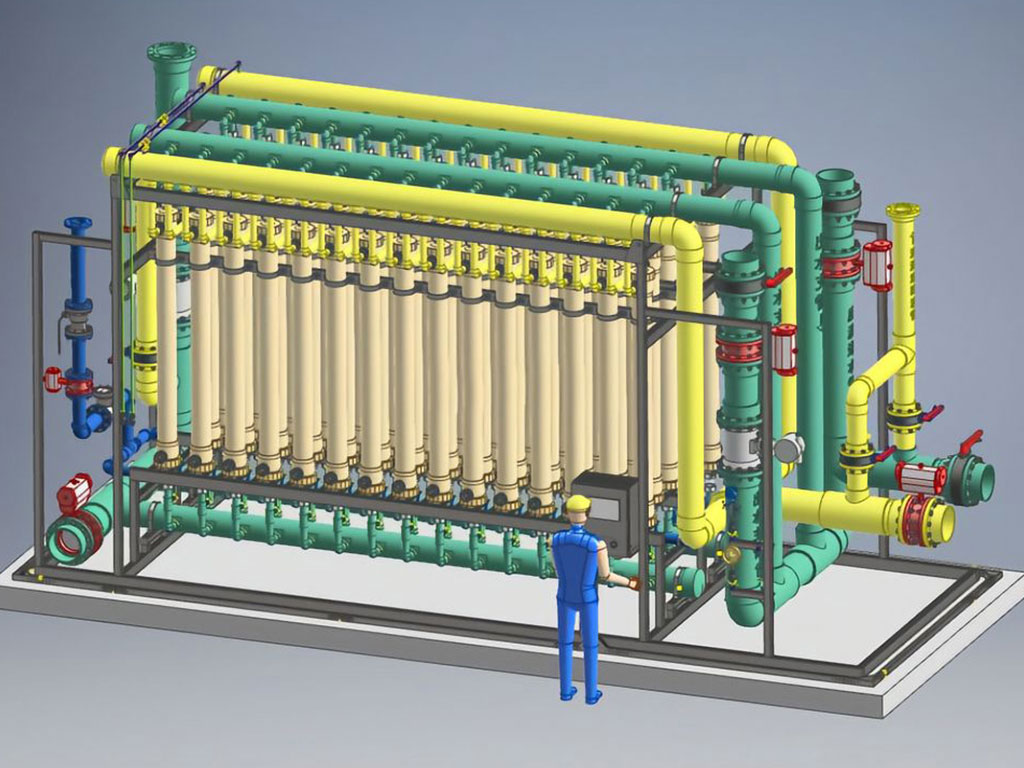
Principle: Ultrafiltration membranes with 0.01–0.1 μm pore size intercept colloids, bacteria and macromolecular organic matter in water. Function: Remove suspended particles and microorganisms, protect subsequent EDI or mixed bed systems, and lower the risk of resin contamination.
4. Terminal Treatment Stage
Water after deep purification undergoes terminal treatment to ensure water quality compliance at the point of use.
4.1 Terminal Precision Filtration
Process: Folded cartridge filters with 0.2 μm or 0.1 μm pore size are adopted to intercept trace particles and bacteria possibly introduced during pipeline transportation and storage. Application: Installed at the end of ultra-pure water delivery pipelines.
4.2 Circulation and Nitrogen Blanketing System
Circulation System: Ultra-pure water circulates in pipelines at a flow velocity higher than 1 m/s to avoid microbial growth and ion precipitation caused by stagnant water.
Nitrogen-blanketed Water Tank: Tanks for ultra-pure water storage are sealed with nitrogen to prevent ingress of atmospheric CO₂ and dust, thus avoiding decreased resistivity and elevated TOC.
4.3 Online Monitoring and Control
Key Indicator Monitoring: Real-time monitoring of resistivity, TOC, temperature, pressure and particle count.
Automatic Control: PLC systems interlock valves, pumps and treatment units to automatically switch to circulation mode or trigger maintenance shutdown when indicators exceed standards.
5. Typical Process Combinations
Different segments of the electronic industry have varying water quality requirements, among which semiconductor manufacturing has the strictest standards. The typical process combination is as follows:
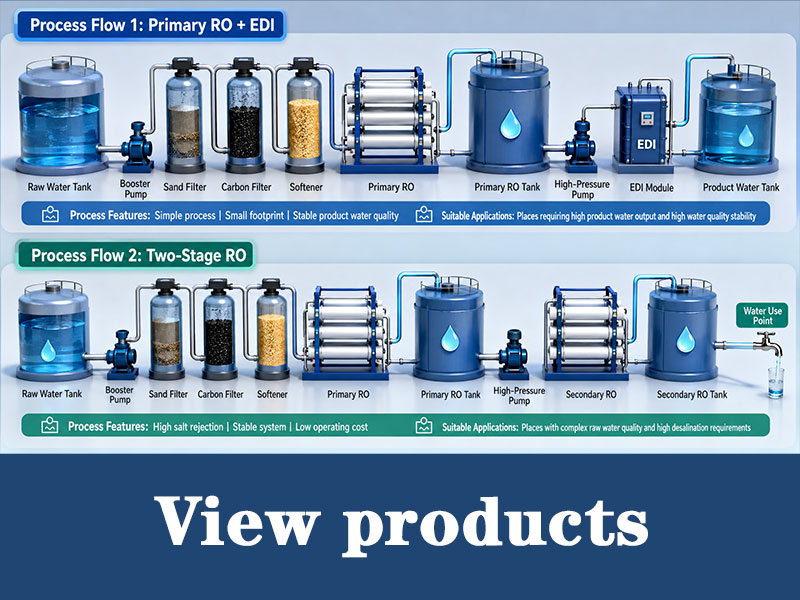
Raw Water→Coagulation Sedimentation→Multimedia Filtration→Activated Carbon Filtration→Security Filtration→1st-stage RO→2nd-stage RO→UV Oxidation→Ultrafiltration→EDI→Terminal Precision Filtration→Point of Use
This combination stably produces ultra-pure water with resistivity of 18.2 MΩ·cm, TOC < 5 ppb, and nearly zero particulate matter and bacteria.