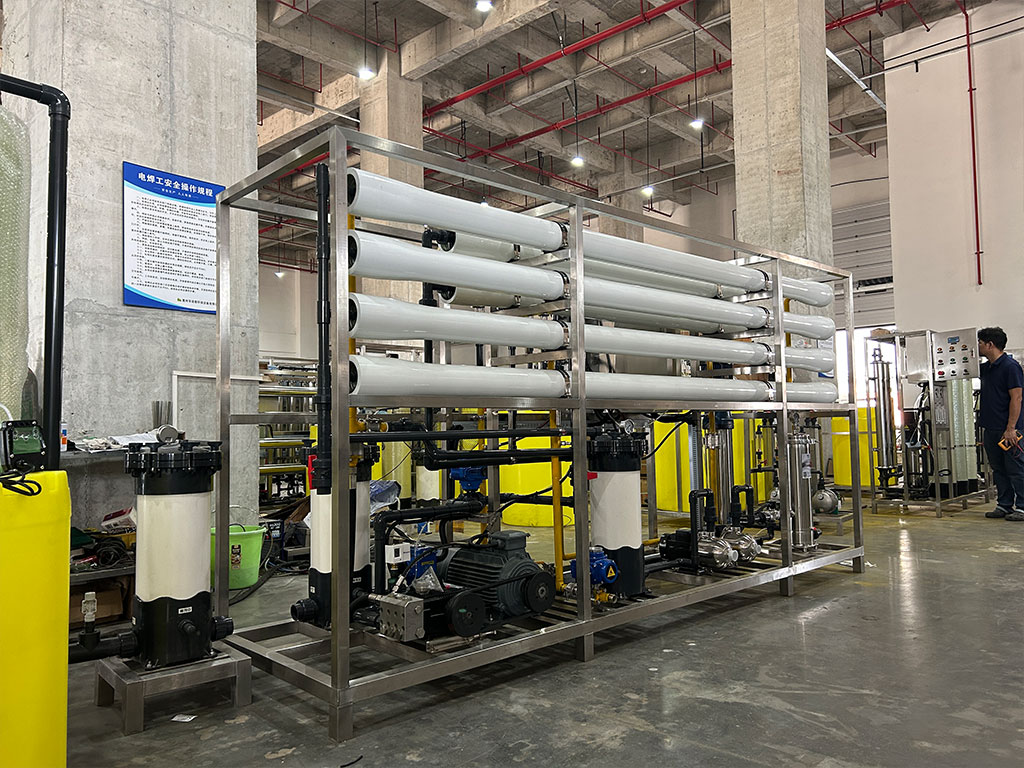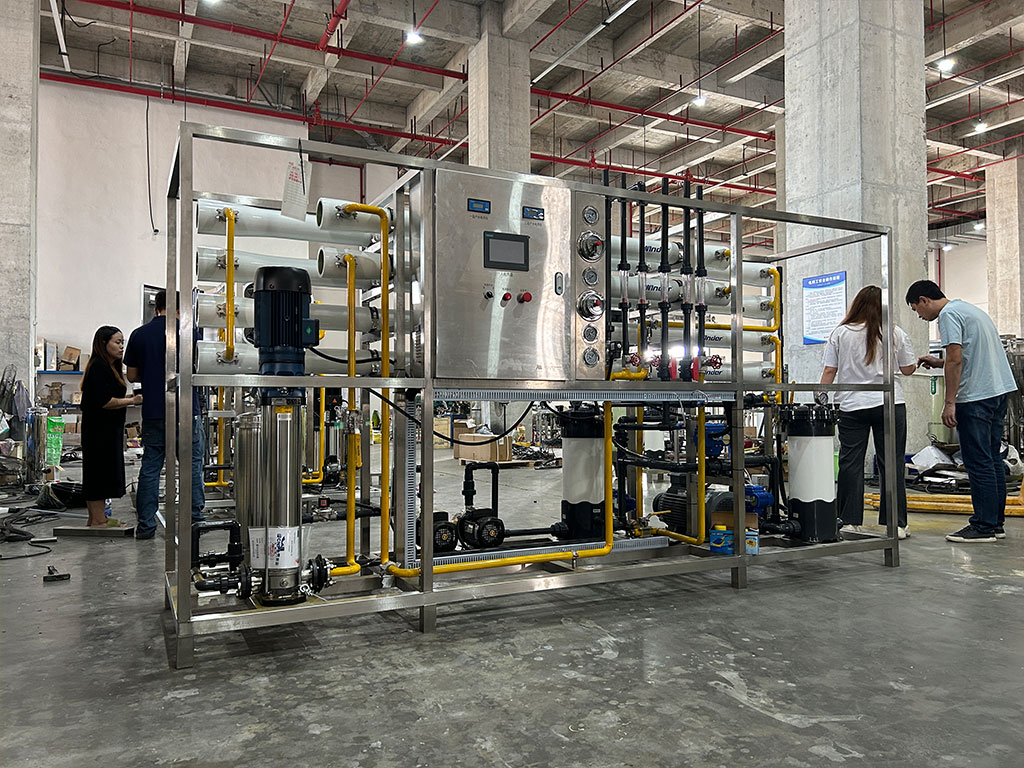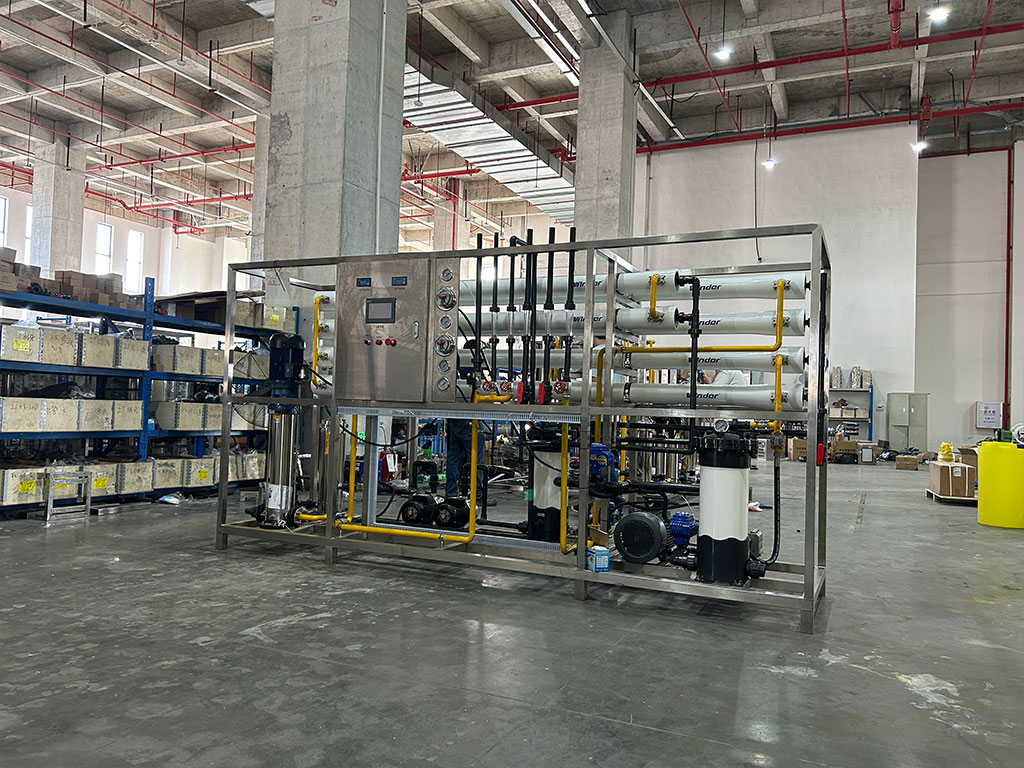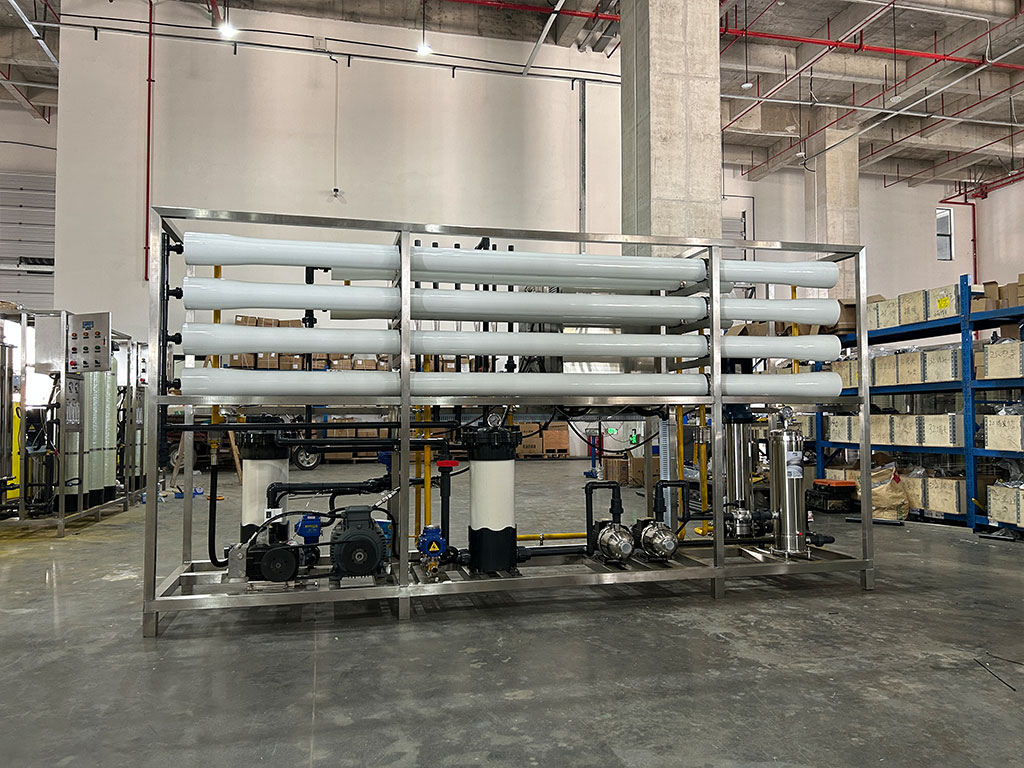




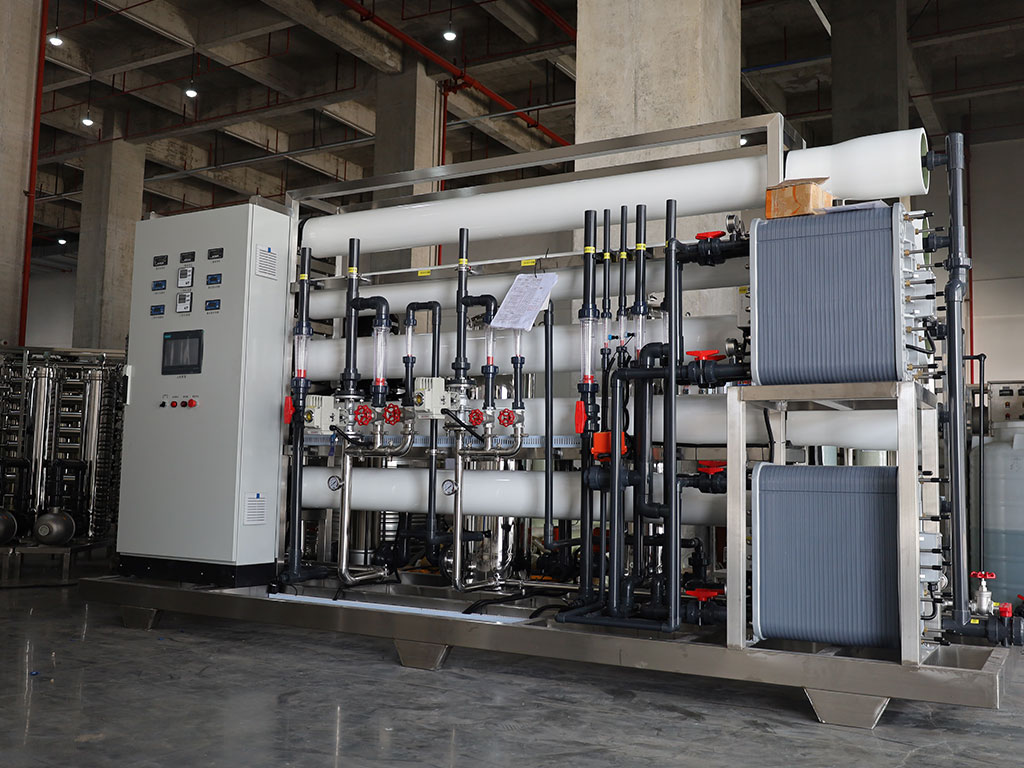
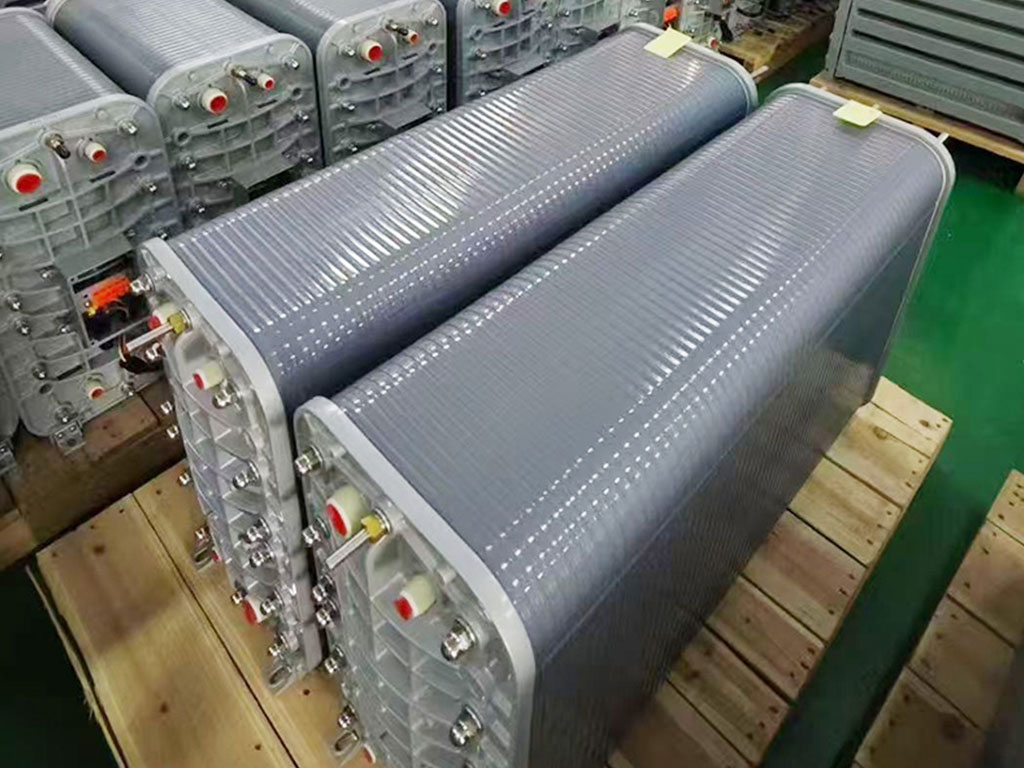
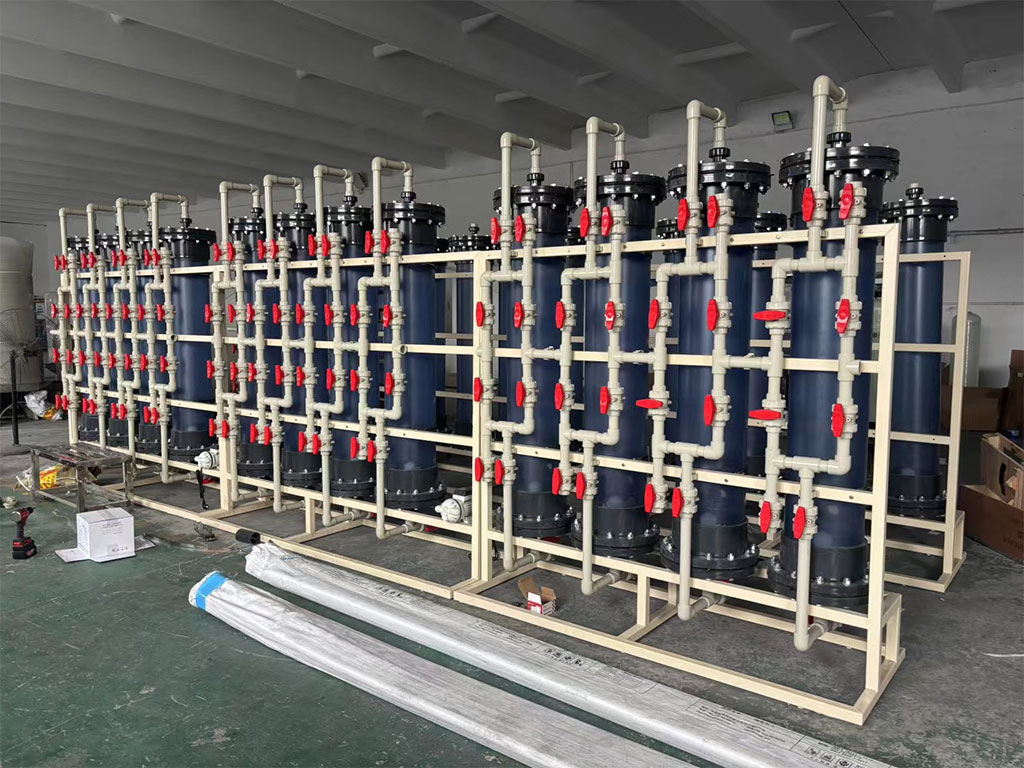
Core process: enhanced pretreatment+energy recovery+seawater reverse osmosis (SWRO)
Design concept: While ensuring reliability, minimize operating costs through efficient energy recovery technology.
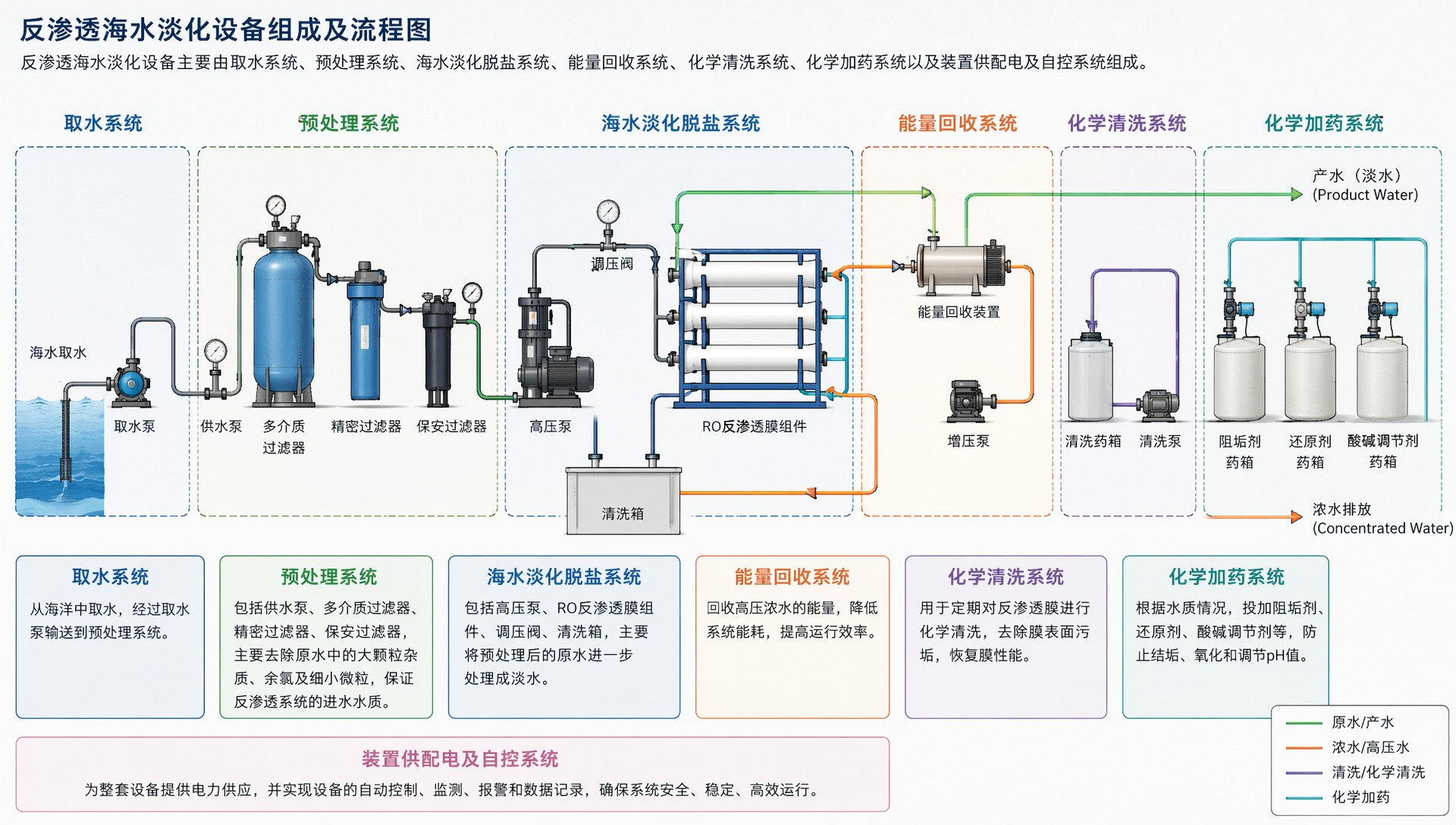
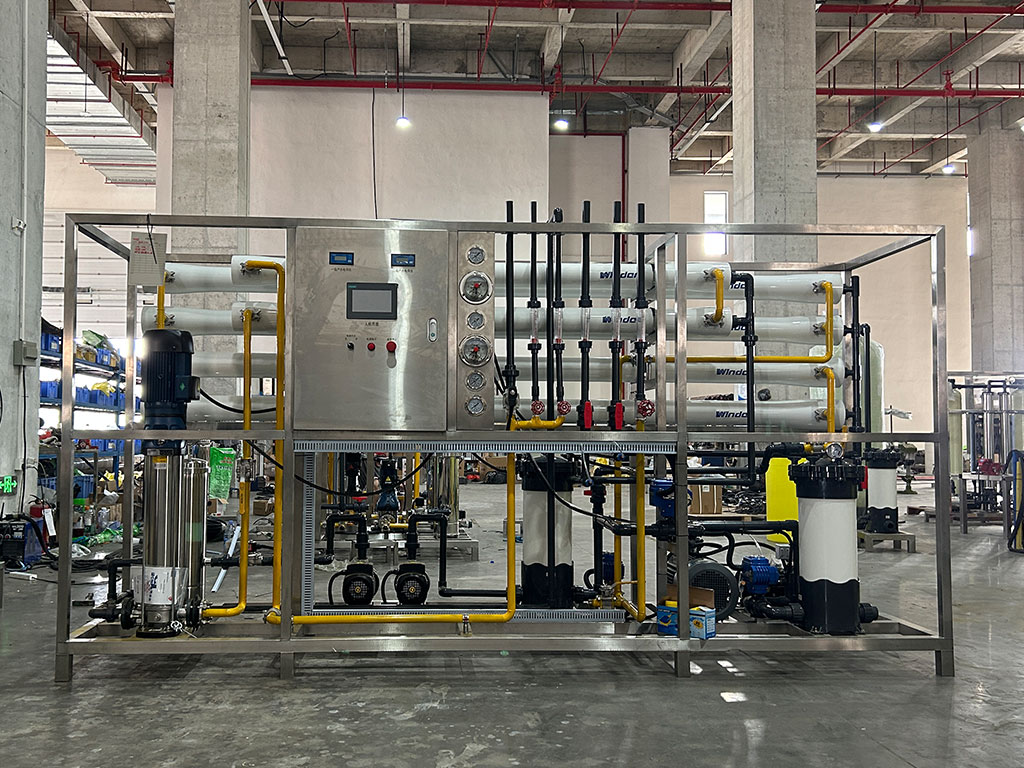
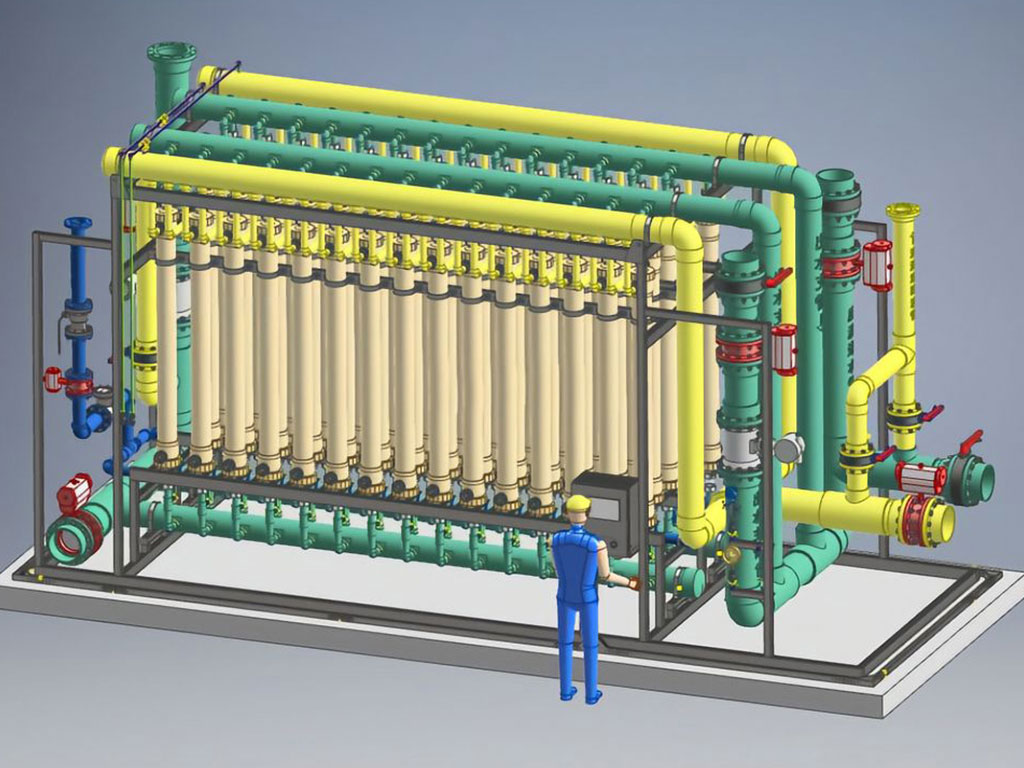
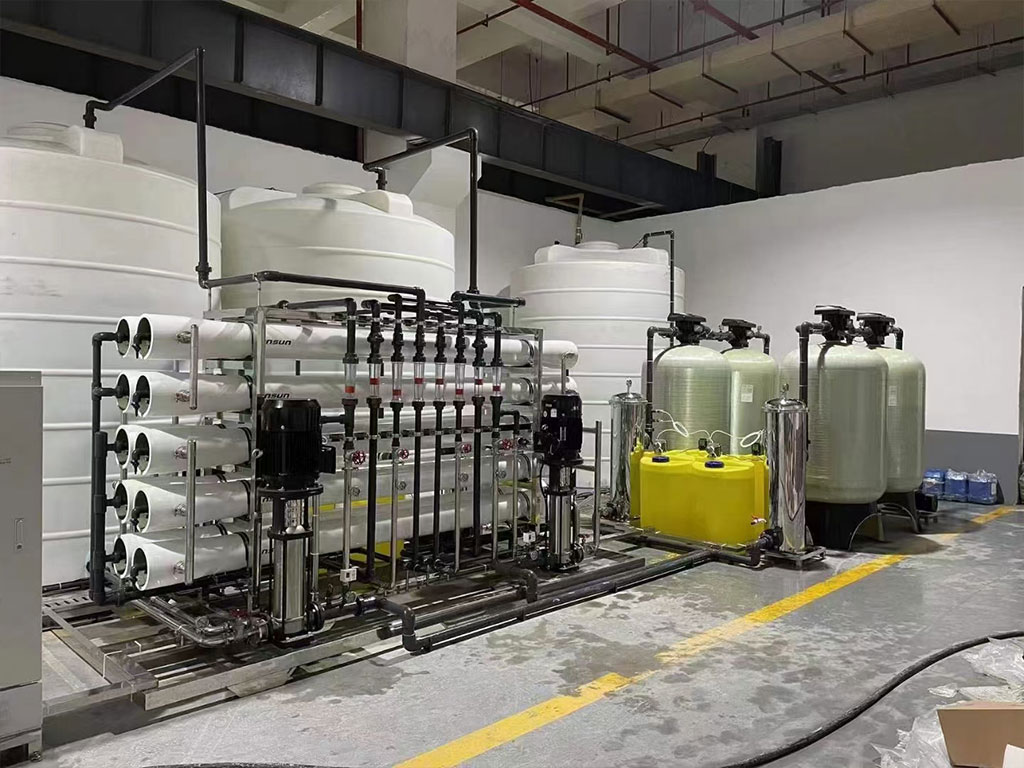
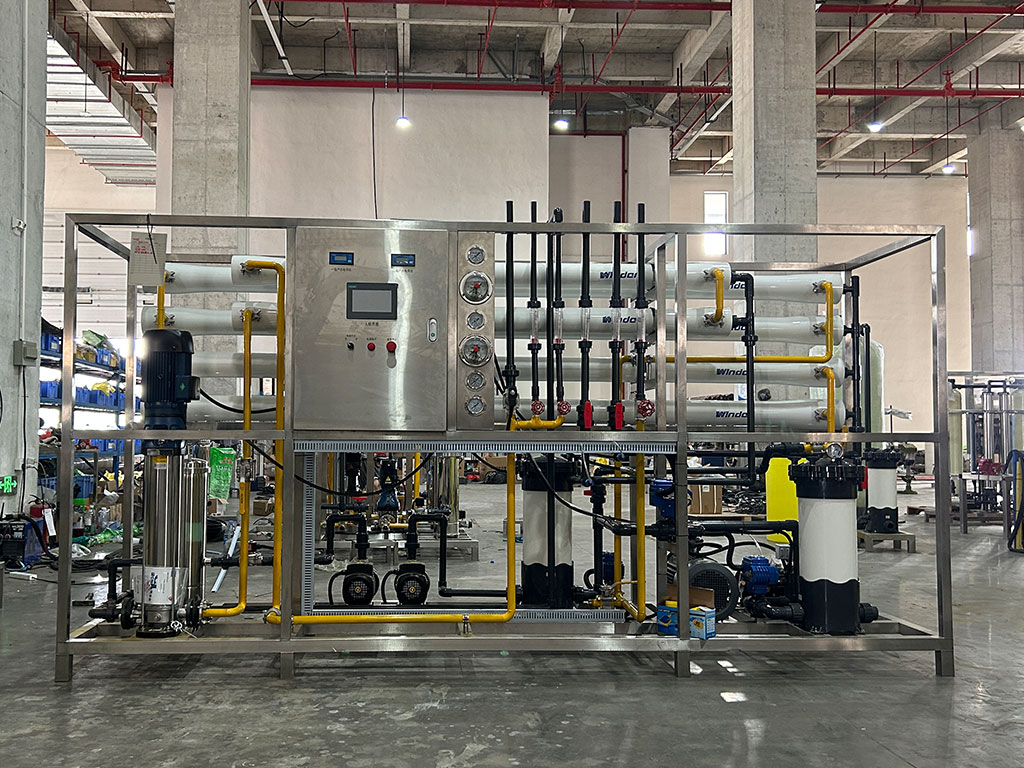
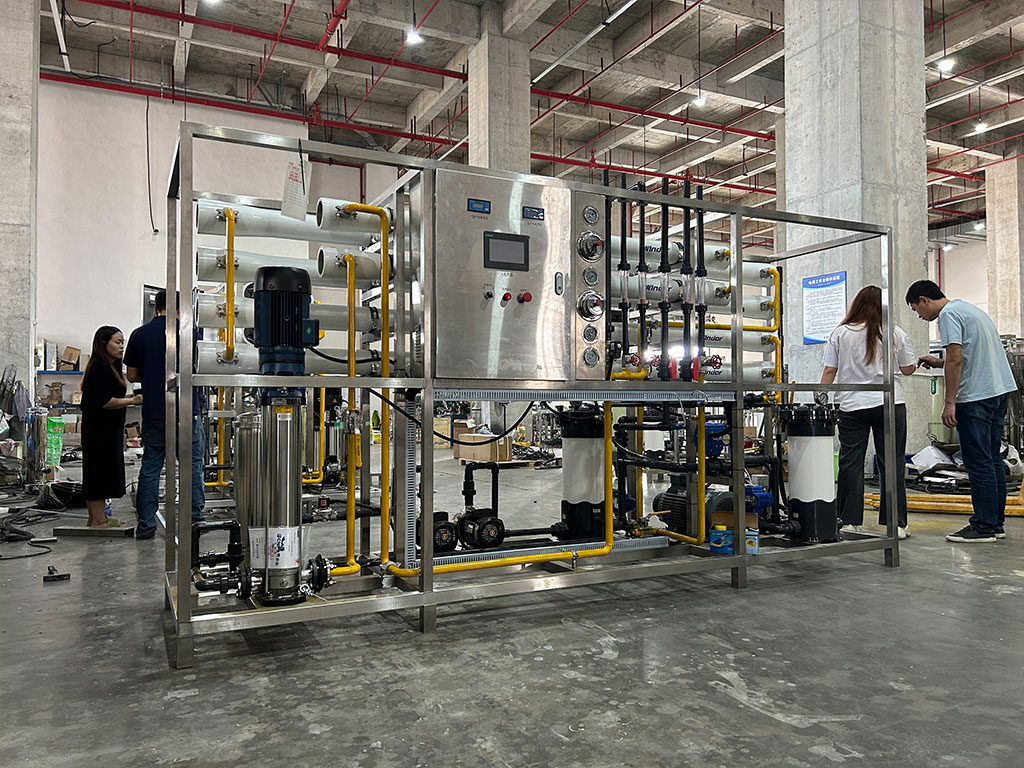
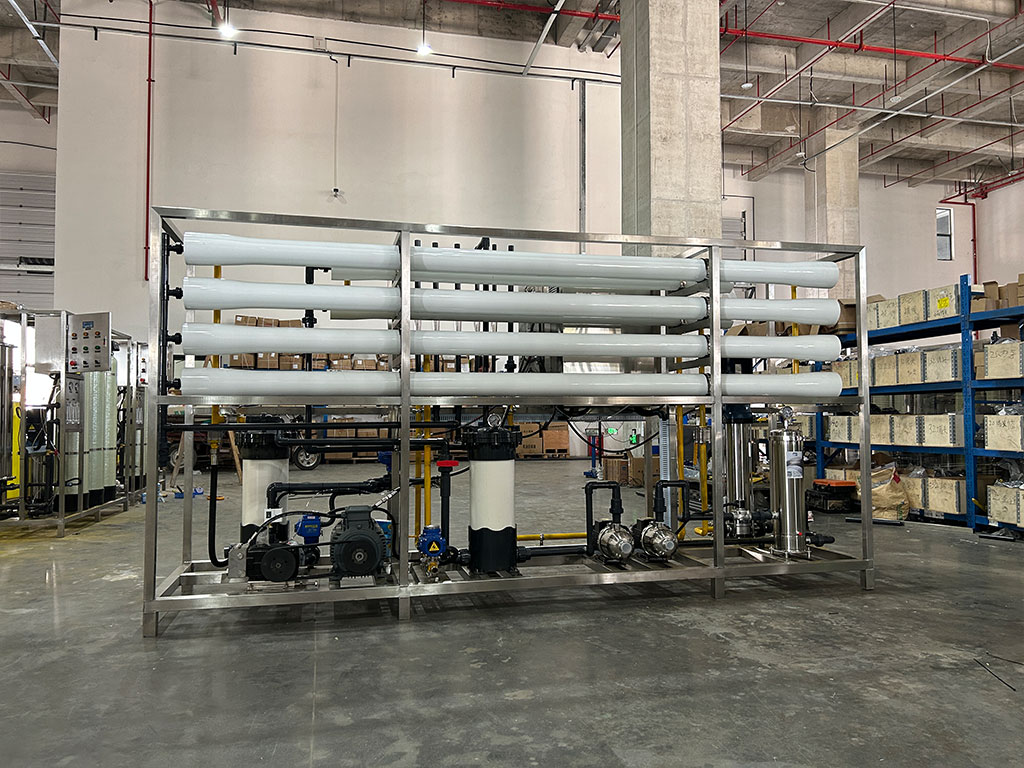
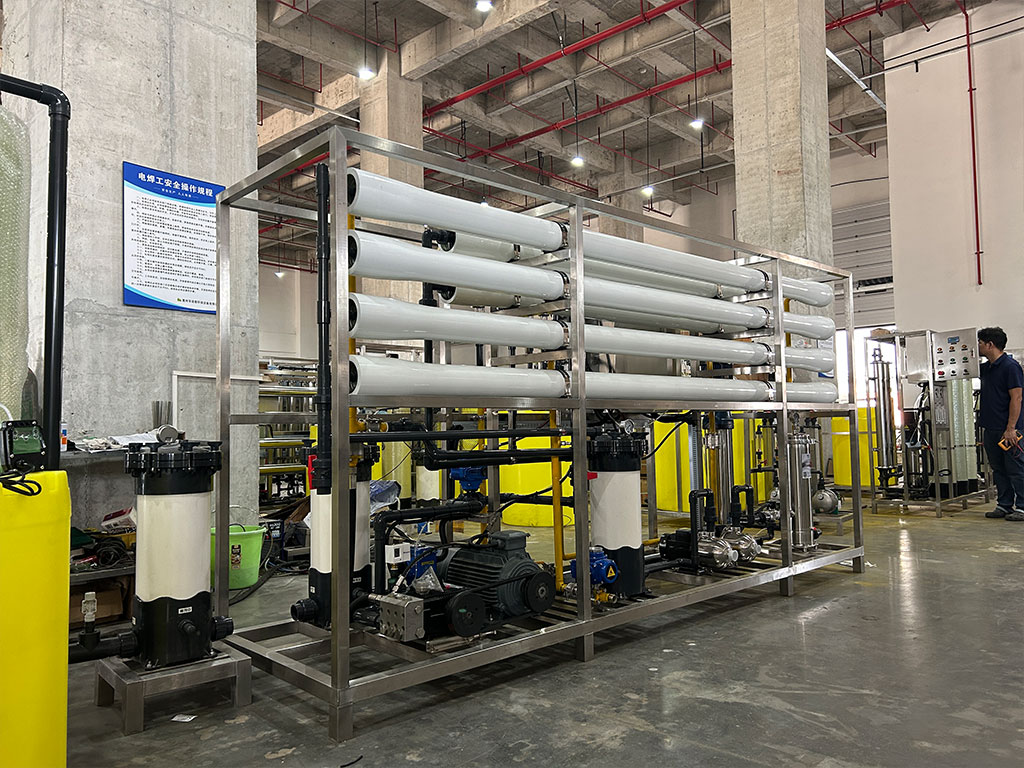
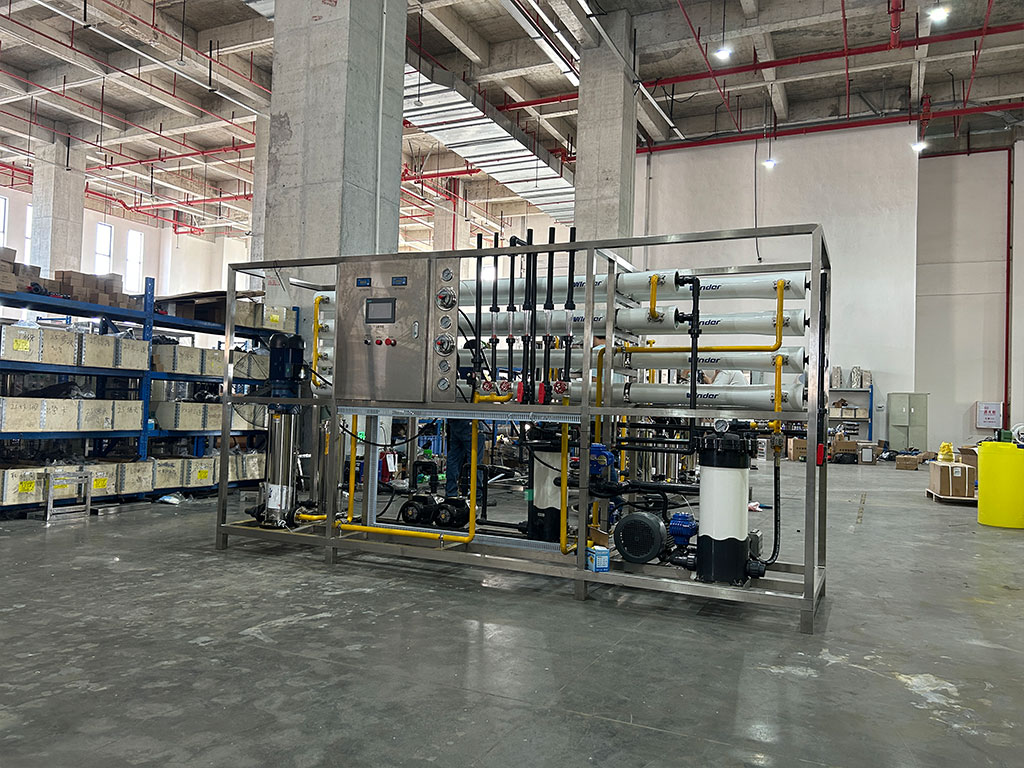
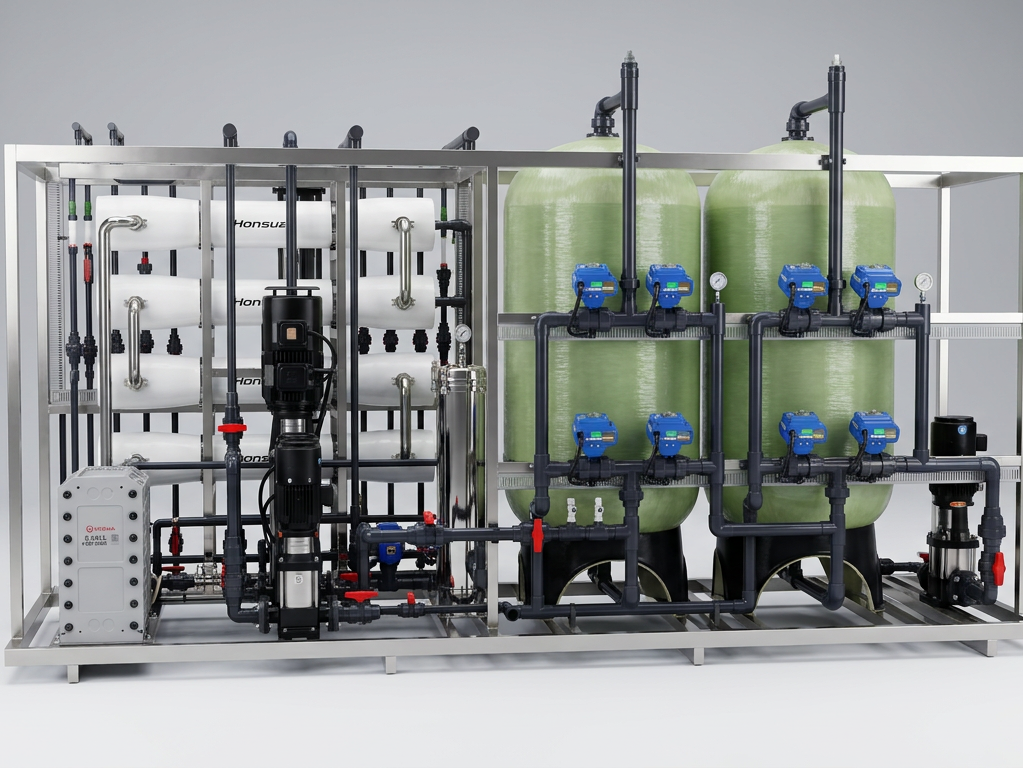
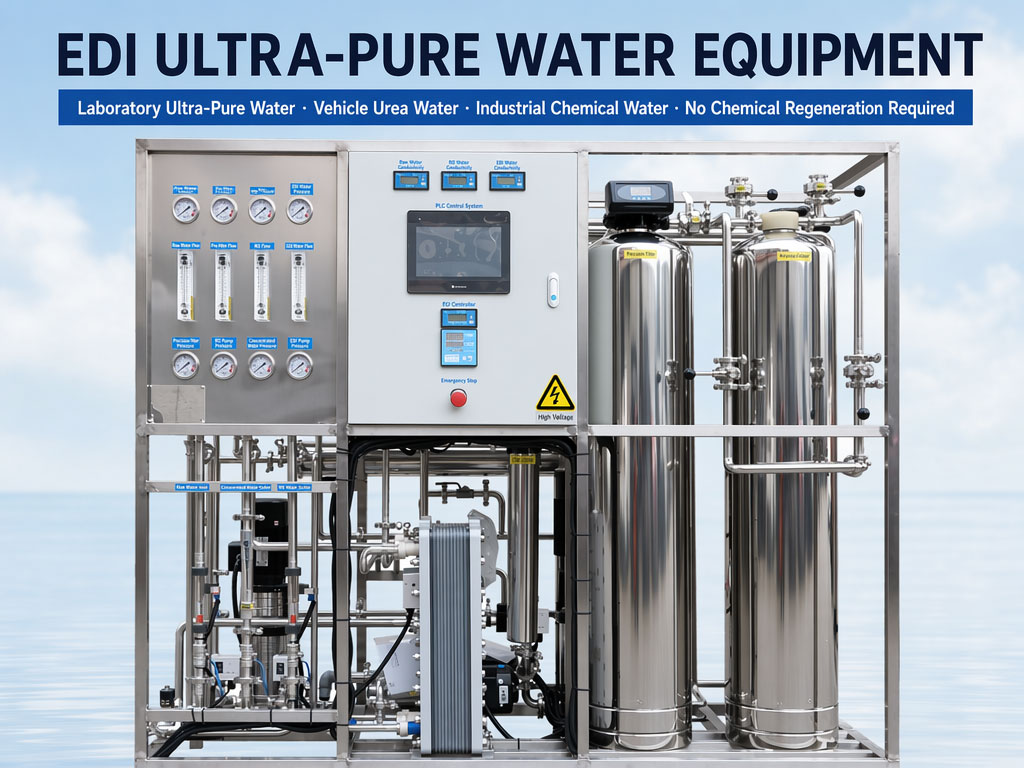
The composition of reverse osmosis seawater desalination equipment includes water intake system, pretreatment system, seawater desalination system, energy recovery system, chemical cleaning system, chemical dosing system, as well as device power supply and distribution and self-control system. The entire equipment consists of a pretreatment system, reverse osmosis system, electrical control system, cleaning system, and dosing system.
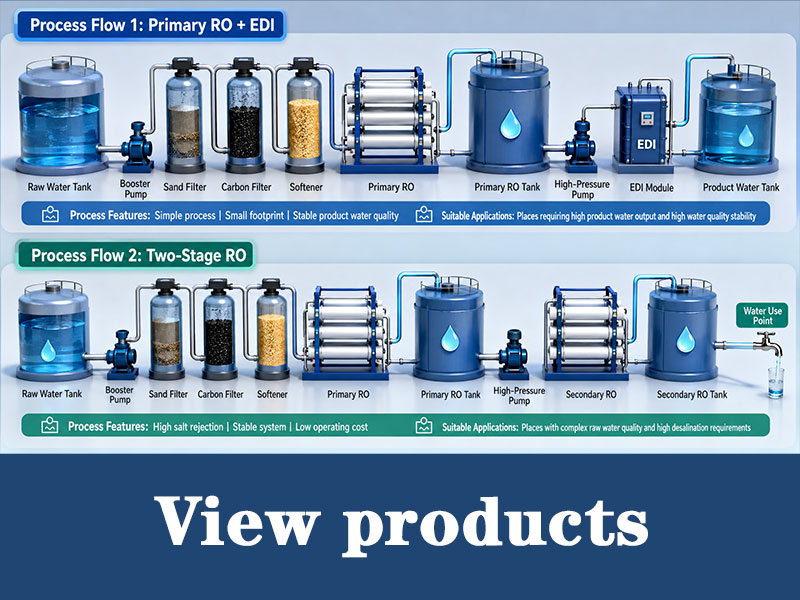
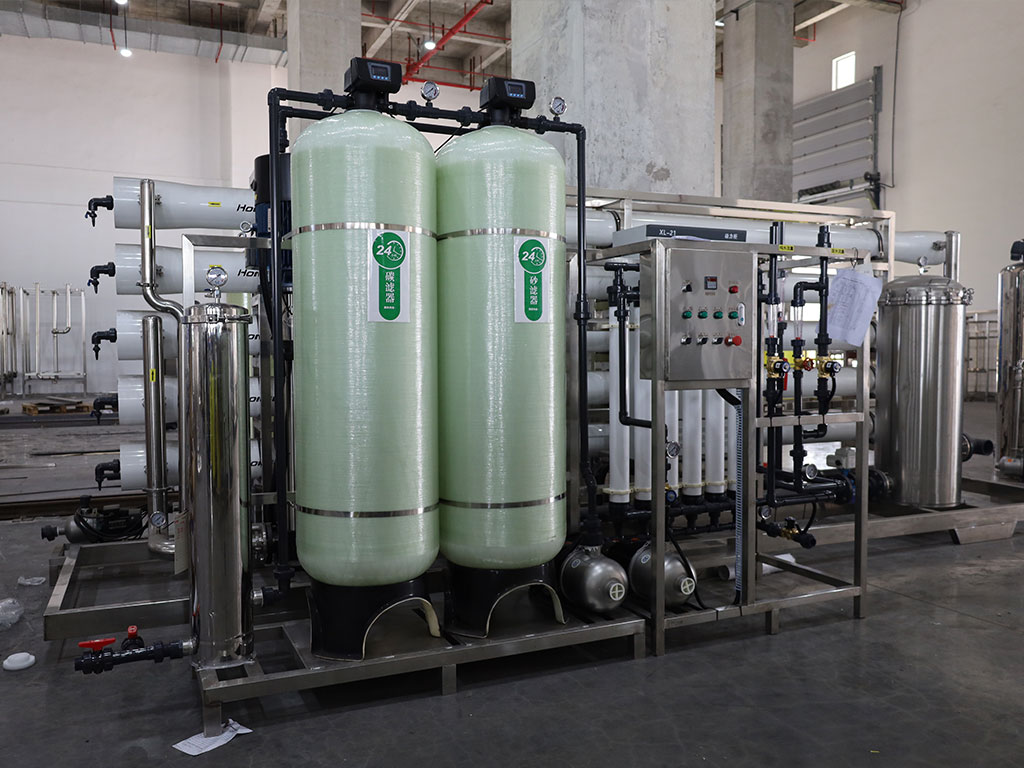
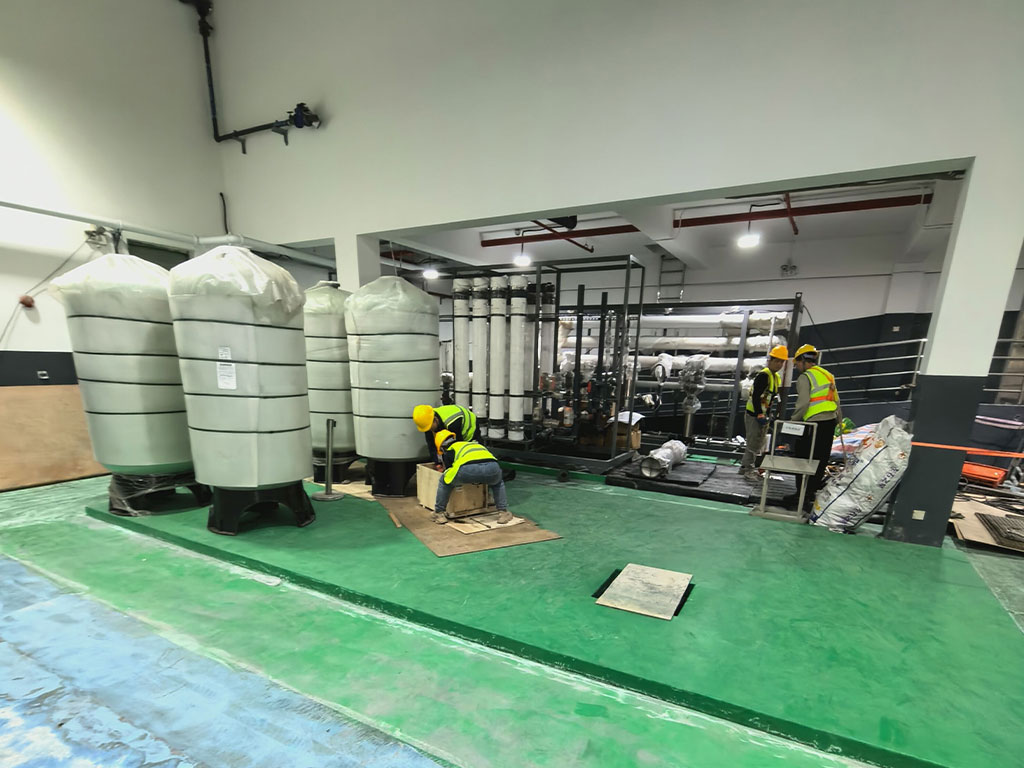
The pretreatment system includes a water supply pump, a multi-media filter, a precision filter, and a security filter. It mainly treats large particle impurities, residual chlorine, and small particles contained in the raw water to ensure the inlet water quality of the reverse osmosis system.
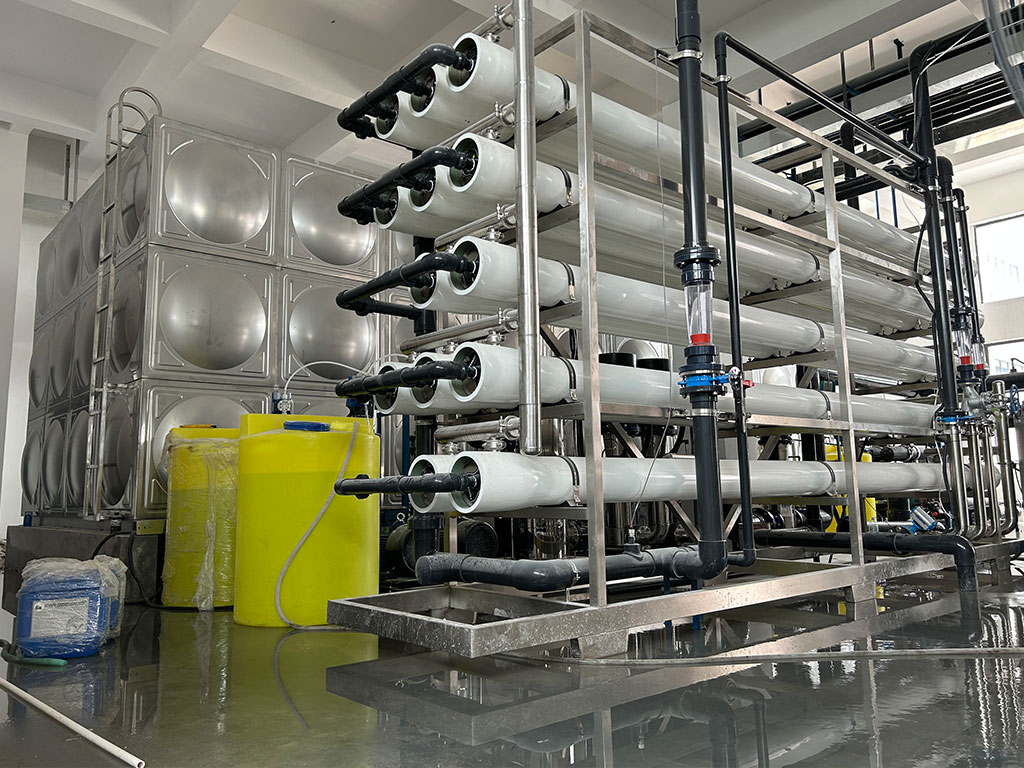
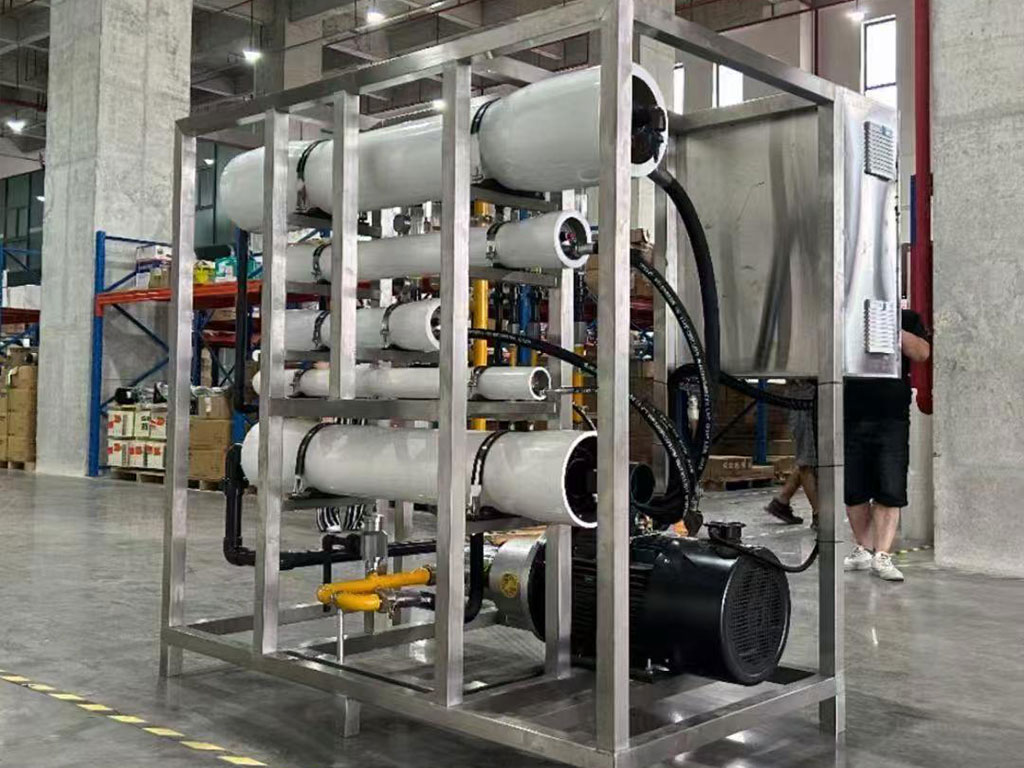
The reverse osmosis equipment system includes a high-pressure pump, RO reverse osmosis membrane components, pressure regulating valves, and cleaning tanks, mainly used to further treat the pre treated raw water into fresh water.
The basic process flow of the equipment is as follows: seawater is pumped into the pretreatment system by the water supply pump, and after being added with fungicides and flocculants through the chemical dosing system, it enters the quartz sand and activated carbon filtration system for filtration. After passing through the pre-treatment system, seawater enters the high-pressure pump and flows through the high desalination rate roll type membrane under the action of the high-pressure pump. By controlling the pressure regulating valve to increase the pressure, some of the pure water in the seawater passes through the membrane and enters the porous collection pipe, and flows out of the equipment through the hose, while the salt fraction is blocked on the membrane surface and discharged from the equipment with most of the seawater. After filtration, the water undergoes water quality reduction, pH adjustment, and the addition of scale inhibitors before entering a 5um security filtration system. The filtered low-pressure seawater is pressurized by a high-pressure pump and enters a pressure exchange energy recovery device. The pressurized seawater is then mixed with the high-pressure pump effluent and enters the reverse osmosis membrane stack system. Under the treatment of the membrane stack, a portion of high-pressure seawater passes through the membrane to form fresh water, which is then stored in a fresh water tank after water quality adjustment. The remaining high-pressure concentrated water enters the pressure exchange energy recovery device to recover energy before being discharged.
Mainly divided into the following steps:
- The use of reverse osmosis separation technology for seawater desalination is internationally recognized as a leading seawater desalination technology.
- The equipment is produced strictly in accordance with industry standards and can be used stably under complex conditions.
- It can be operated at room temperature (5-40 ℃), with excellent water production, low energy consumption, and low cost.
- The rack piping and fittings are made of 316 (high pressure) stainless steel and corrosion-resistant PPR material (low pressure). The power supply is widely applicable (220-380-415V/50HZ/60HZ/three-phase).
- The preprocessing device adopts multi way valve technology to avoid frequent cleaning and environmental pollution.
- Easy to operate, easy to maintain, with electricity and seawater, producing fresh water immediately after startup.
- Professional personnel guide equipment installation, debugging, and operation.
- The containerized seawater desalination system products are at the same level of technology and quality, with low prices and efficient and high-quality after-sales service, making it the right cost-effective product for you to choose.